
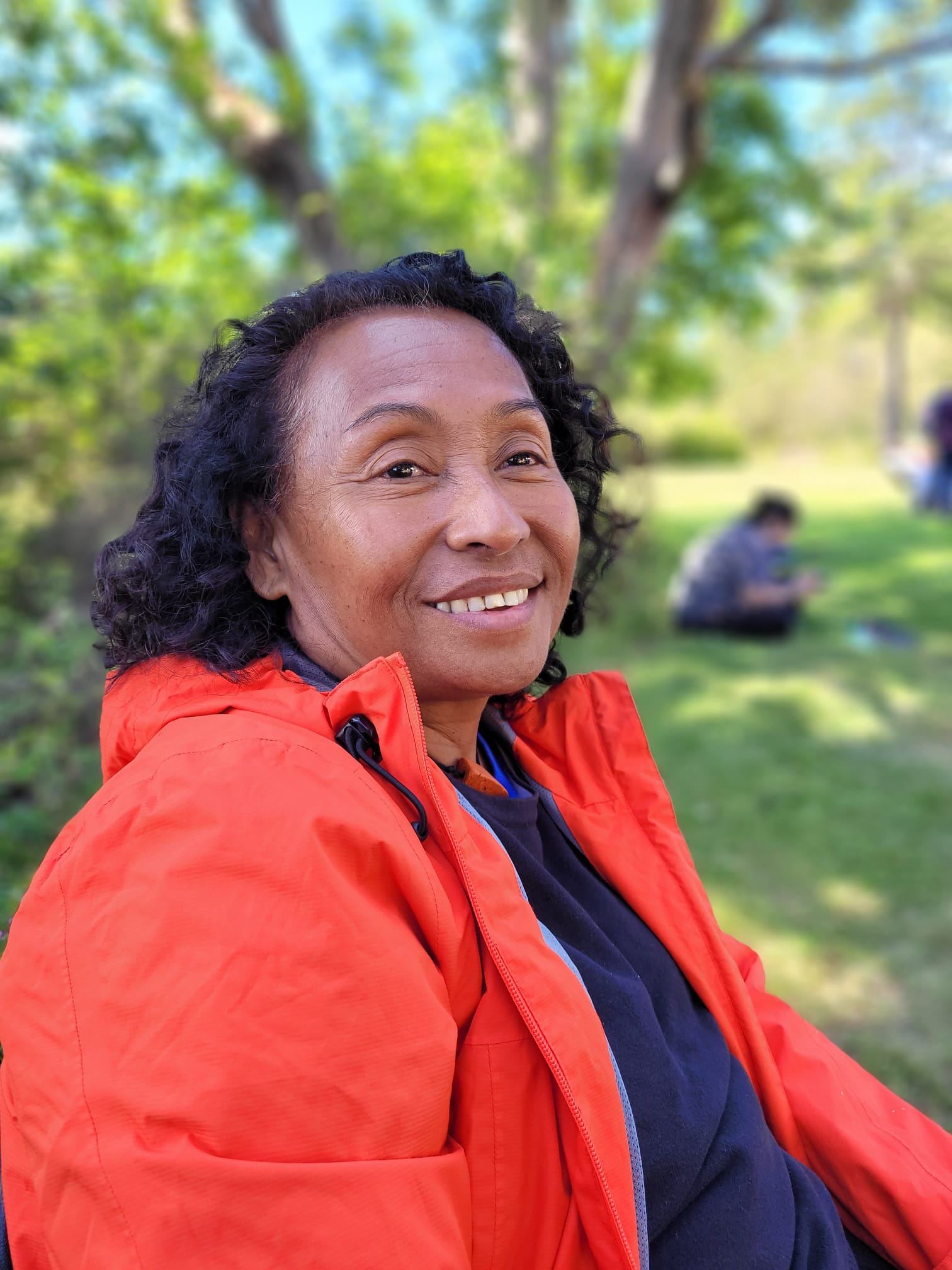
Ann smiling at the Salish Summit. Photo Credit: Barbara Wilson
Ann Singeo, founder of the Ebiil Society, has dedicated her life to reawakening traditional Palauan fisheries through decolonizing research that emphasizes intersectionality and justice. Equity is at the heart of Ann’s work – as an advocate for Indigenous-led marine conservation and restoring traditional fisheries, she is not only preserving ancestral knowledge—she’s building systems that honor it.
Ann’s Upbringing in Palauan Fisheries
Ann Singeo’s journey into Indigenous aquaculture and marine restoration began on the shorelines of Palau, listening and learning from her community of fishers. Ann grew up going to the ocean with her family. Her father had his own fishery, and her mother would participate in the women’s fishery. Fisheries in Palau are gendered, with men harvesting in offshore waters through spearfishing, line fishing, trolling, and fish traps. The women’s fishery in Palau is nearshore and prioritizes sea cucumber gleaning, gathering shellfish, reef casting and working in the mangroves. Ann’s introduction to the women’s fisheries of Palau started at a young age, watching, learning and mimicking her mother’s every move. Growing up alongside women who taught her fishing methodology, the lunar cycles’ influence on tides, and place-based ecological knowledge, Ann gained a deep appreciation of traditional fishing practices.
While harvesting seafood was one of the goals of the women’s fishery, some of Ann’s favorite memories include the sharing of food, stories, and laughter during long days spent in nearshore waters as women fished in groups. Women-led fisheries are rooted in collective care – ensuring there is enough during the harvest to bring home to those who were unable to join. The culture embedded throughout women’s fisheries was something Ann was excited to pass on to future generations. However, a diminished abundance of seafood and the current state of Palauan fisheries has made it so only one of Ann’s two daughters was able to participate.
“I have two daughters and the older one, I was able to take her out with me during those times. And she would just come out and collect with us for a little bit, then eat…She would always say, hey, can I come with you as you’re going to the ocean? But I also have a younger daughter who is 17 years old and I have never done that with her because there is no more sea cucumber. And my youngest daughter does not know that tradition. And she does not know the Traditional Ecological Knowledge part of that fishery because it’s not there anymore. And I feel that she’s deprived of something that is very core to our women culture, where we also find peace. It’s also where we are able to be just ourselves. And it’s such a beautiful space. And I feel that she is deprived of that beautiful culture, because of the lack of fishery management, or lack of management for the women fishery.”
– Ann Singeo
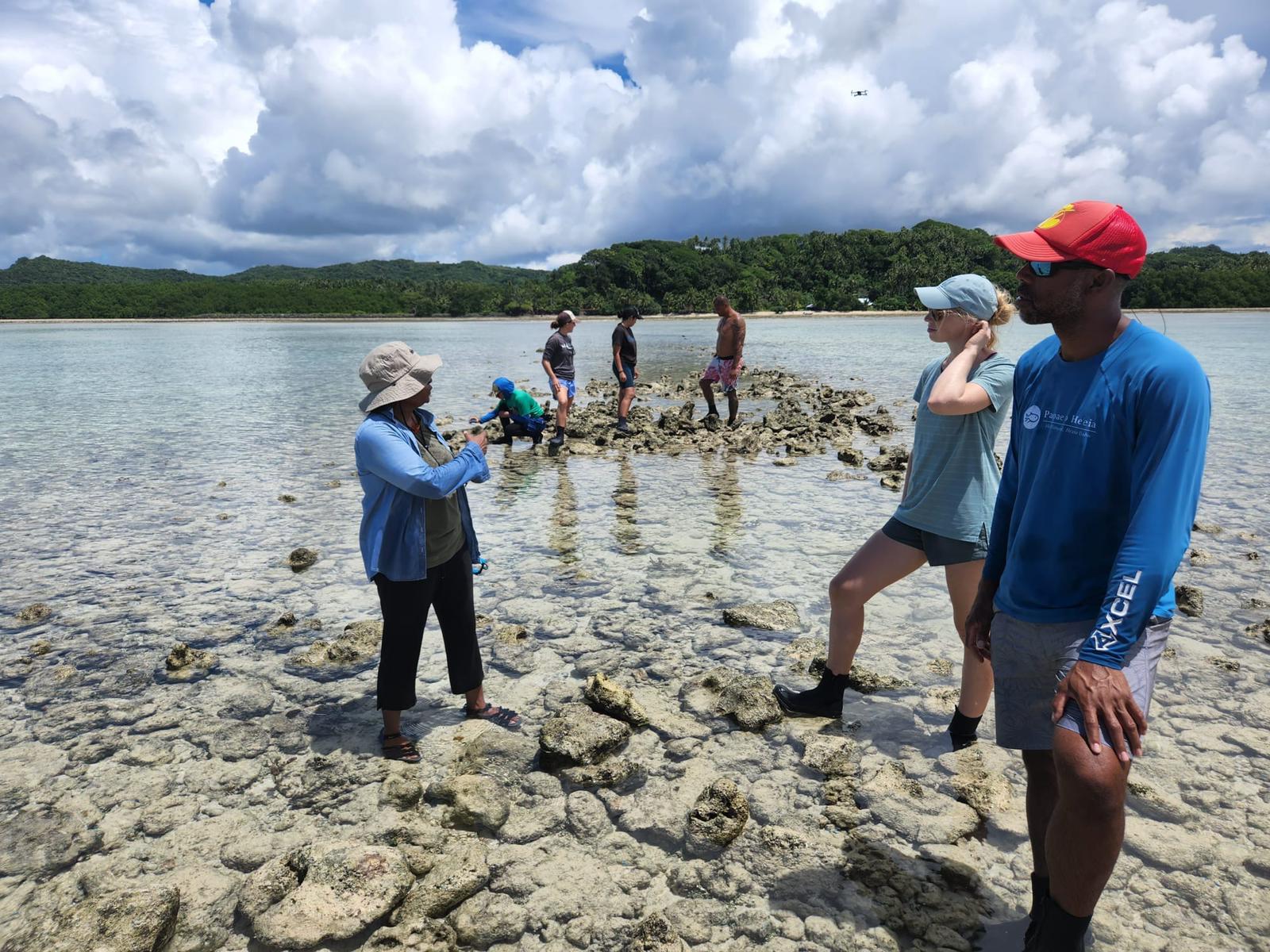
Ann teaching about beng (Palauan fishtraps) to Indigenous Aquaculture collaborators. Photo Credit: Kimeona Kane
Changing Fisheries – Centering Indigenous Knowledge in Science
Ann’s upbringing on the shorelines of Palau influenced her life of work. In 2005, Ann founded the Ebiil Society, a grassroots conservation organization that works with communities on Indigenous-led fisheries research and restoration. Some of the Ebiil Society’s most important work began as a project for summer camp youth — to count daily catches as fishers returned from a day out at sea. This camp activity quickly turned into a community-led project that is rooted in Indigenous values such as protecting fish and shellfish through sustainable harvest limits, and selective harvest based on age structure for long-term perpetuation of various species. These activities sparked powerful conversations on the state of fisheries and self-determination in Palau.
“We were finding out some very interesting information,” Ann recalls. “And the community themselves were discovering information about their own fishery as well.” This shared work ignited a larger movement. What if fishers and the community themselves designed the monitoring tools, not scientists? What if marine management and policy were created by and centered on the people who have lived with the ocean for generations, including women holding community values as much as economic ones?
Together with local communities, Ann co-designed a long-term fishery monitoring program with Indigenous fishers that was shaped by Indigenous values and Traditional Knowledge. This study asked fishers what was important to them and what they wanted to find out based on how they fish and how they think about fishing. This collaborative work has been reviewed by fishery scientists and recognized as “the most legitimate scientific study of fisheries in the Micronesian region at that time.”
Ann’s research addresses fisheries conservation through decolonizing it, exploring how traditional Palauan fisheries have been altered throughout time by working with communities to understand their priorities when it comes to the management of their fisheries. While the tools and methodologies of these fisheries are important to understand, this work really emphasizes how local values of the fishery are what set them apart.
Community fisheries once followed strict ethical and ecological practices to ensure long term sustainability and success: take only what’s needed, let small fish go, and never harvest an entire school. Larger catches were also only permitted in the community fisheries while individual fishers gathered only what was needed for their family within their local village reefs. These practices ensured sustainability for generations, however, the introduction of cash economies on the island resulted in a major shift of fisheries practices, community resource sharing and conservation ethics.
The establishment of cash-based economies created a transition away from using local goods such as coconut oil lanterns and cooking fires and shifting to imported items like gasoline stoves and kerosene lights. This change forced people to search for cash-based income. Fishers who once caught fish to feed their families or share with their community began to sell that fish for cash to participate in this new island economy.
The transformation from traditional fisheries to market-based fishing altered the fishing technologies, scale, and ethics of Palauan fisheries. Tools like gillnets that were once reserved for limited community fishing events became commonplace for individual fishing operations due to their lightweight and efficient nature. “Now you have an individual who is harvesting at the same rate as a community fishery,” Ann says. “That completely throws out the societal structures and norms that were created for sustainability.”
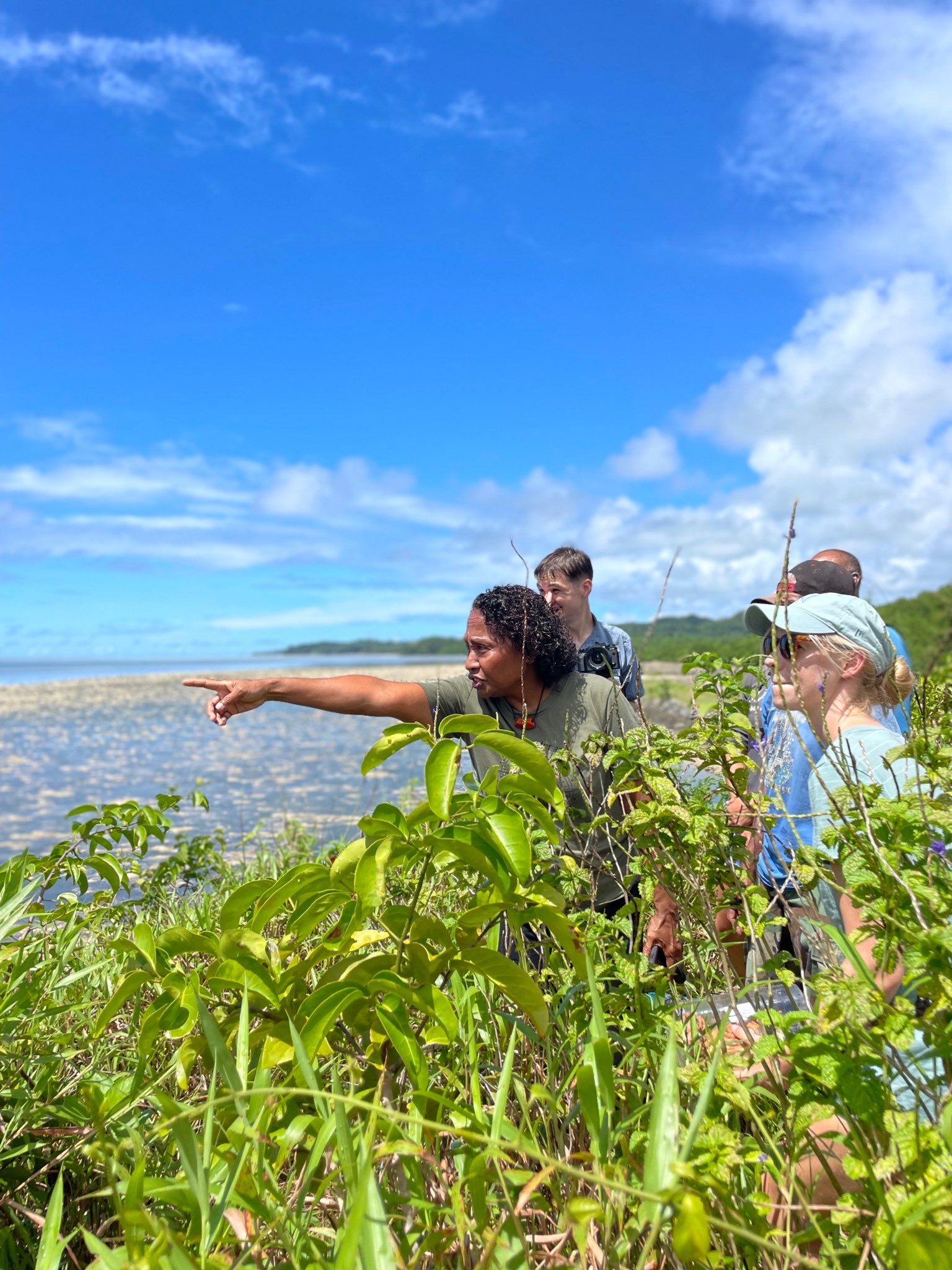
Ann teaching about Indigenous Aquaculture in Palau to visiting marine stewards from around the Pacific. Photo Credit: Momi Afelin
Shifting Fisheries: Gender, Equity, and Sustainability
While fisheries initially were modified due to a shifting economy, Ann has also been vocal about how this transformation impacted the gendered dimensions of fisheries. She explains how women are often left out of both economic and regulatory conversations when it comes to fisheries policy and conservation.
“Women are oftentimes pushed out of opportunities in the seafood industry” she says. Women’s fisheries in Palau usually occur in nearshore waters with low-impact tools, which often results in sustainable yet low volume catches that are critical for food security and cultural continuity. Ann says that women’s fisheries in Palau are currently approaching the point where they could become discontinued in the near future because there have been no efforts to restore them. Policies have failed to address these gendered dynamics in fisheries, leading to more policies focused on male-dominated fisheries, and profit maximization. Ann has pushed for developing policy that addresses these divides within society and how people use different spaces in the ocean for different purposes with distinct knowledge, ensuring policies uphold equity and sustainability for the future of fisheries in Palau.
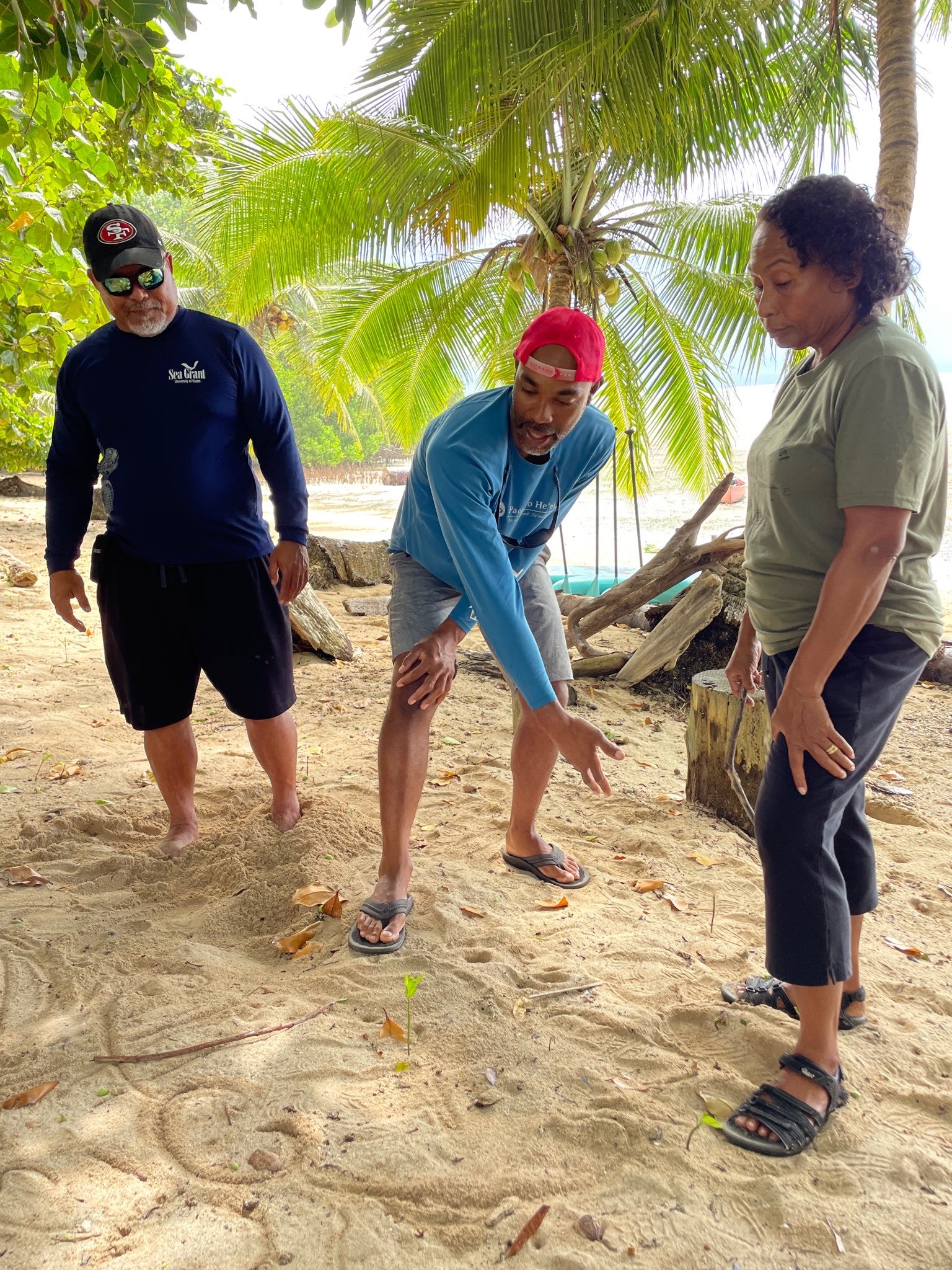
Beach teachings in Palau as beng are drawn into the sand. Photo Credit: Momi Afelin
Pacific Fishing Futures
As Ann continues to fight for equitable fisheries policies that center gender and sustainability, there have been hopeful indicators for the futures of fishers on Palau. The Ebiil Society’s community-based research has shown that the fishers who practice traditional conservation ethics were doing much better than the ones who were not. Their fishery was more ecologically sustainable and they had more success fishing. These outcomes illustrate the long-term benefits of practicing traditional fisheries methods and management practices throughout the region.
While Ann’s work is rooted in Palau, her impact is Pacific-wide. Through her role in the Cross-Pacific Indigenous Aquaculture Network, she continues to foster collaboration across nations (see our highlight of the knowledge exchange Ann hosted in Palau), supporting and connecting Indigenous communities working to restore and adapt their ancestral aquaculture systems. Ann’s message is clear: solutions must come from within the community. “Those people who are the traditional users of those spaces must be at the center of the discussion,” she says. “When they own the solution, it becomes more sustainable”.
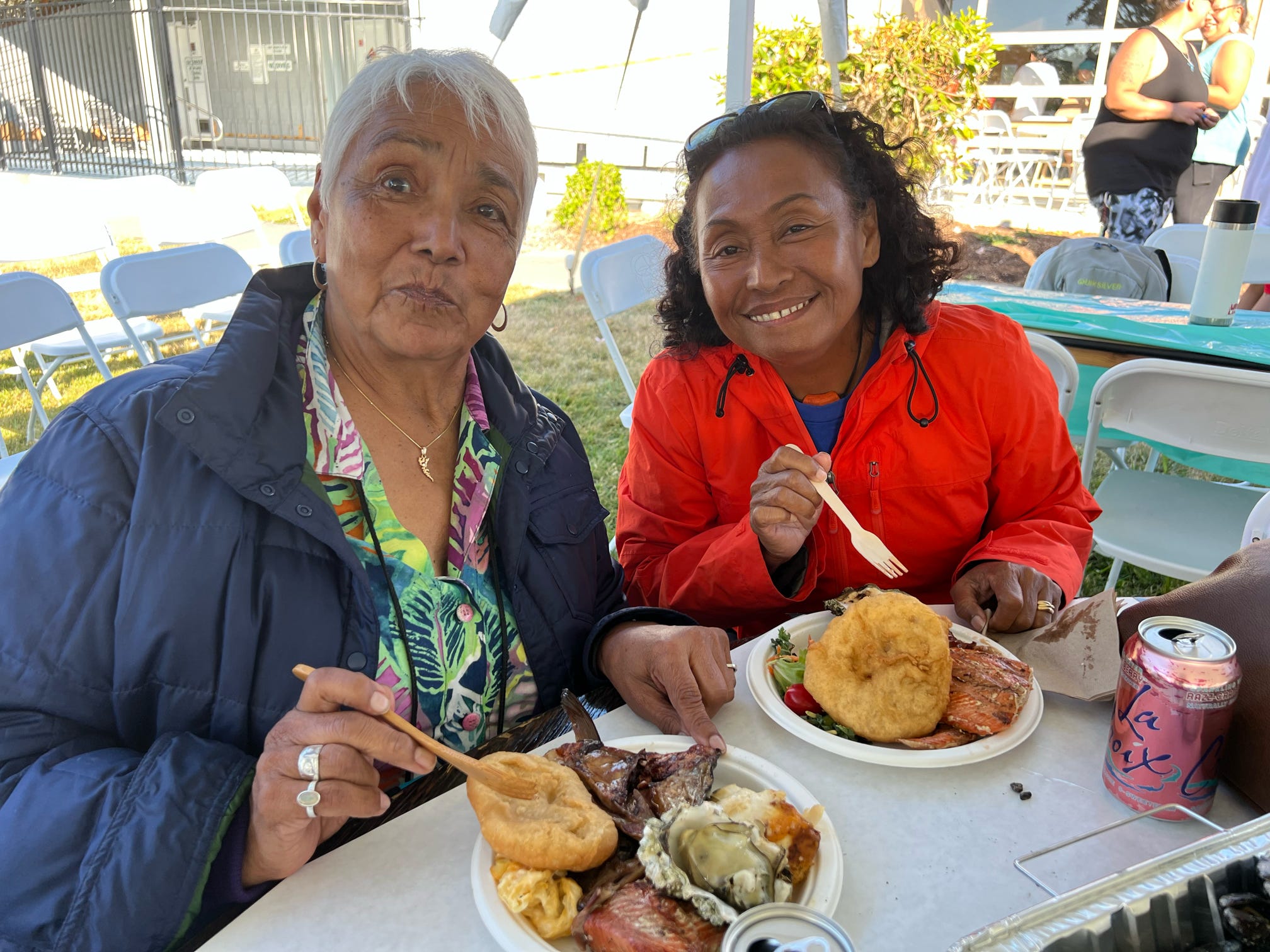
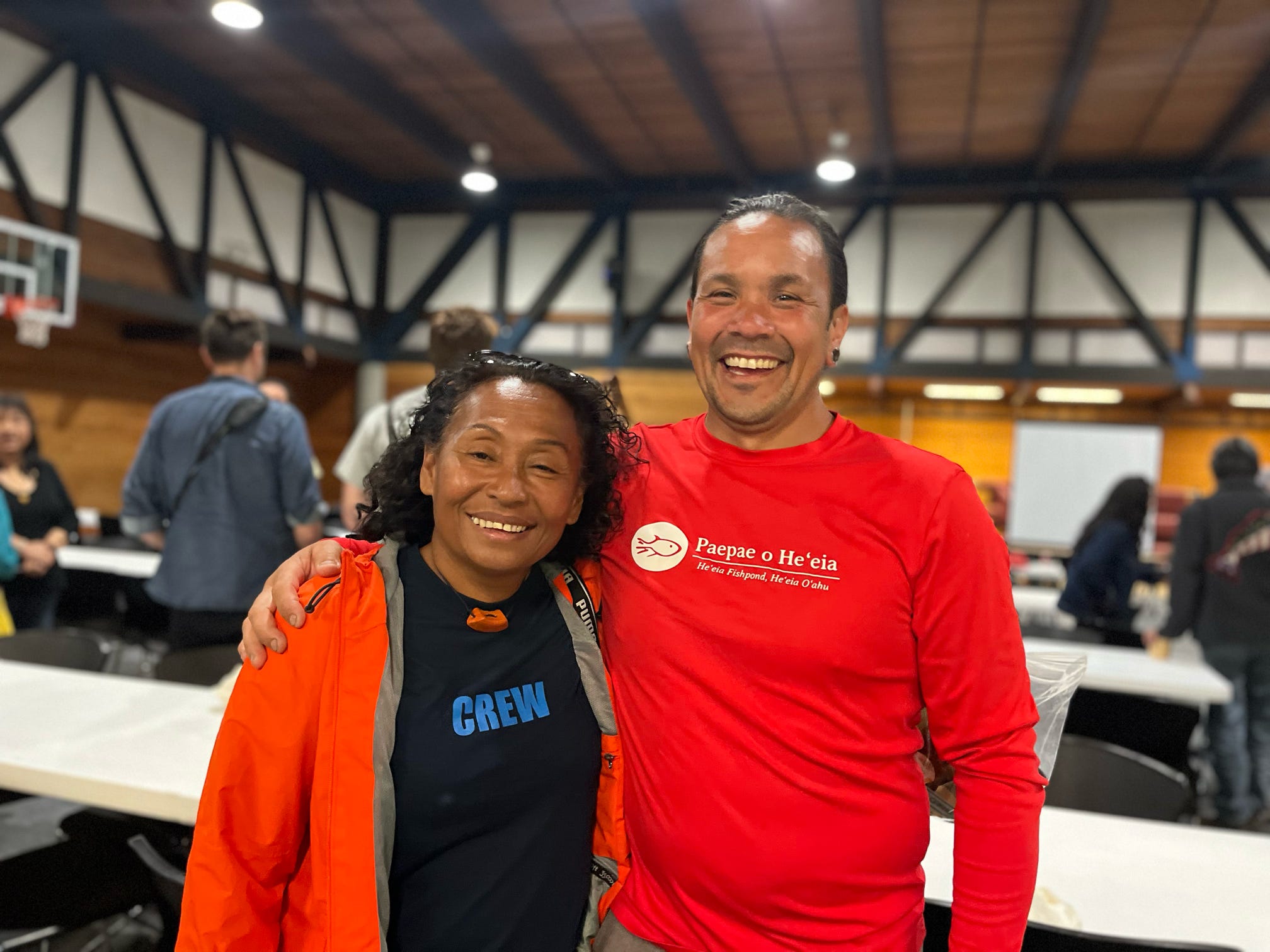
Cross-Pacific friendships and smiles during Indigenous Aquaculture gatherings. Photo Credit (left): Brenda Lima. Photo Credit (right): Skye Augustine.
Dig into additional research on fisheries dynamics in Palau:
Singeo, Ann, Caroline E. Ferguson, Iseko Willyander, Reid Endress, Surech Bells, and B. Endress. “Key findings from Palau’s gender and marine resources assessment: Women and men both important for use, management and youth empowerment.” Bulletin; Pacific: Noumea, New Caledonia 34 (2021): 21-26.
Endress, R.G.P., 2024. Documenting Traditional Marine Fishery Practices in Palau Through Rebuilding Indigenous Fish Traps (Master’s thesis, San Diego State University).
Ferguson, Caroline, Ann Singeo, and Alex Ferrier-Loh. “Bridging fishers’ and Western scientific knowledges to farm sea cucumbers in a community setting in Palau.” Pac. Commun (2020).